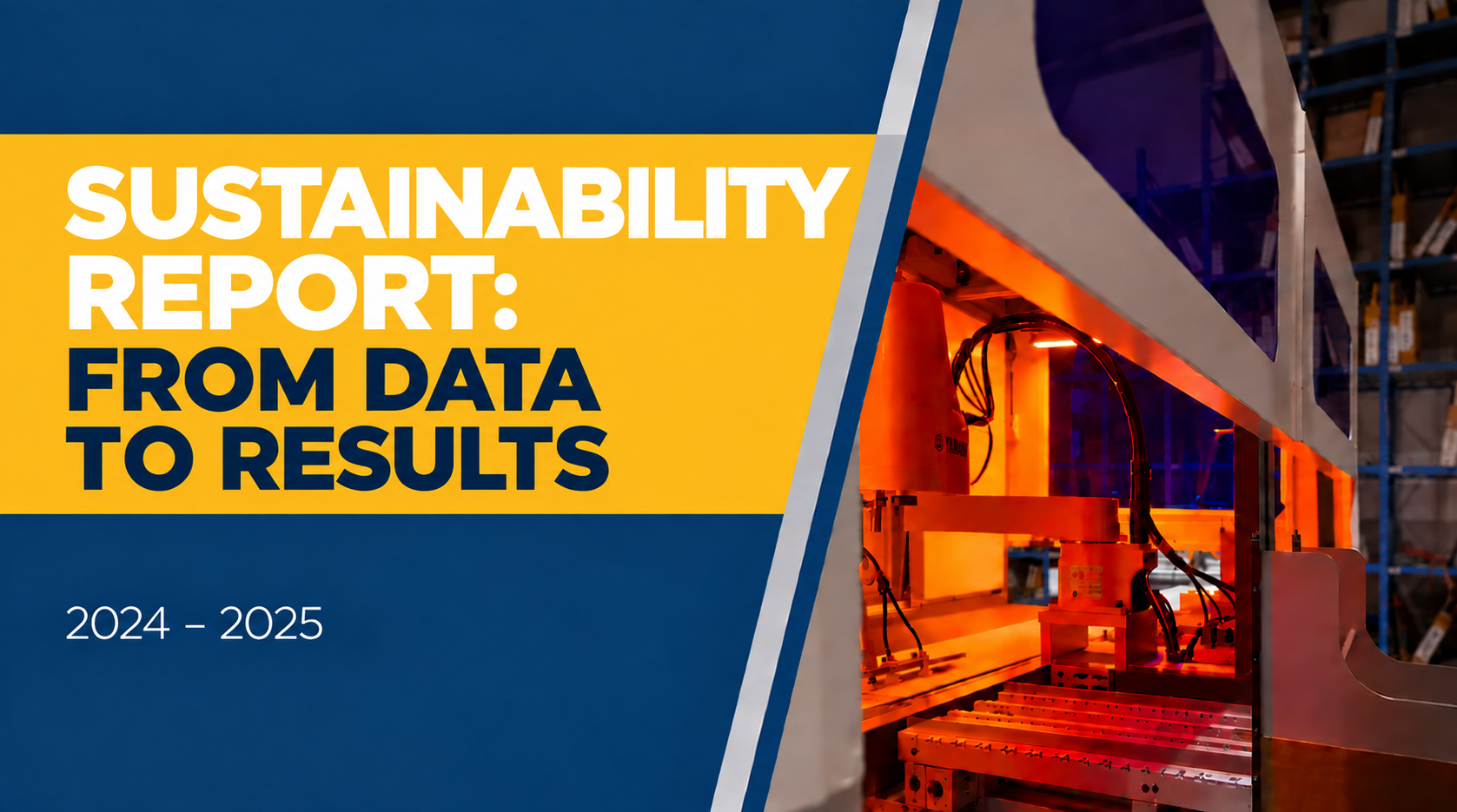


Comparing 2024 and 2025, we can see the first concrete results of Albertini Packaging Group’s sustainability journey. This evolution process is taking place through a series of choices that have already had an impact on production, and we can assess the changes through measurable data.
The production process is exactly where some of these changes are more evident: during the course of 2025, APG has continued to invest in technology, introducing the new Heidelberg Speedmaster XL 106. The new press reduced energy consumption by 35.81% while maintaining the same level of output, also reducing paper waste and the use of chemicals.
“In this day and age, an investment that is deemed productive must be evaluated for all the improvements it can bring to the whole chain. Performance and efficiency remain key elements, but you also have to factor in consumption, resource use and waste reduction. The results we achieved in 2025 confirm that investing in technology means being able to improve on multiple aspects of production at once”, says Michal Sobieski, CEO of Albertini Packaging.
As part of the same approach, the company made a series of choices on the energy front as well. In 2025, APG began sourcing certified renewable electricity, eventually taking 54% of its electricity consumption from renewable sources. This choice also contributed to reducing the emissions associated with purchased energy, which fell by approximately 55% compared to 2024 (data calculated using the market-based method).
Besides energy, the management of raw materials also showed improvement. In 2025, the quantity of materials purchased relative to turnover decreased by approximately 19% compared to 2024, reflecting a more efficient use of resources.
However, technologies and processes are not the only things that are changing: this kind of journey also involves people and the skills required to keep pace with the sector’s ongoing transformation.
Over the two years 2024–2025, APG’s training courses covered the topics connected to the ongoing changes: ESG, waste management and traceability, the new European Packaging Regulation, Lean methodology, health and safety, and the development of managerial and professional skills.
Regarding safety in particular, one result stands out: in 2025, no recordable workplace injuries were reported. Compared to the four injuries in 2024, the rate fell from 5.15 to zero.
Technology, energy, materials, skills and safety paint a broader picture of the progress the company has made between the two years. “The data is not a mere collection of isolated indicators, but allows us to track the effects of the choices we have made and to understand where those choices are producing concrete results,” concludes the CEO.
It is at this point that measurement takes on its full significance, enabling APG to understand what is changing, assess its effects and continue to act with greater awareness.
Read the first part of the Sustainability Report
The full Sustainability Report is available here